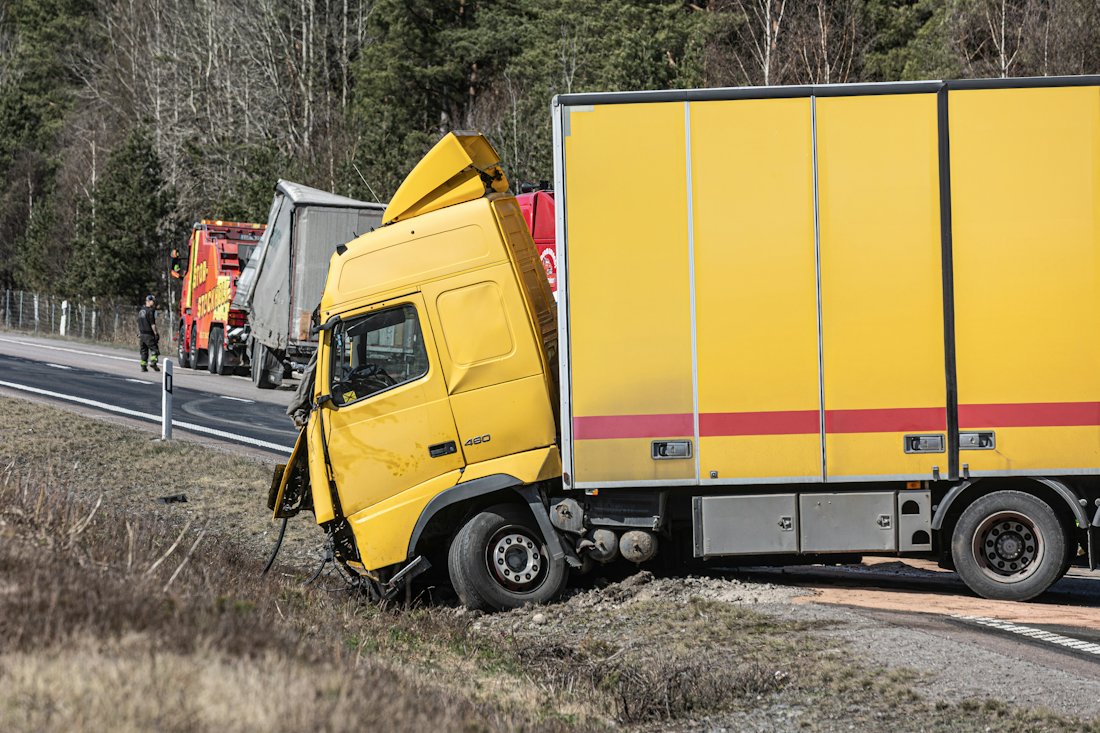
A loaded 18-wheeler can weigh twenty times what your car does, and the companies behind it have investigators working the crash within hours. Answer a few questions and a claim specialist will call you back — then match you with a truck accident attorney who handles commercial vehicle claims in your state. The case review is free and there is no fee unless you win.
Free and confidential. Submitting this does not create an attorney-client relationship.
A claim specialist will review your answers and call the number you gave us, then introduce you to a truck accident lawyer licensed in your state. If your crash was recent, say so on the call — the carrier’s records are on a clock.
Call 800-589-3204This is an advertisement · Injury Case Claim is not a law firm
A truck accident lawyer handles crashes involving commercial vehicles — 18-wheelers, semis, tractor-trailers, box trucks, tankers, dump trucks, delivery vans and buses. The injuries are worse because of physics, but the reason these claims are handled differently is the paperwork behind the truck.
Interstate carriers operate under the Federal Motor Carrier Safety Regulations. Those rules generate a trail most drivers never see: electronic logging device records of hours behind the wheel, pre-trip and post-trip inspection reports, maintenance and repair history, driver qualification files, drug and alcohol testing results, dispatch and load records, and the truck’s own engine control module data. That trail is where fault in a truck case is usually proved — not in the police report.
The catch is that much of it can be lawfully discarded on the carrier’s retention schedule, some of it within six months, and the engine data can be overwritten as the truck goes back into service. A truck accident attorney’s first move is usually a spoliation letter demanding the carrier preserve all of it. That letter is worth more to the case than anything that happens in the following year, and nobody sends it for you.
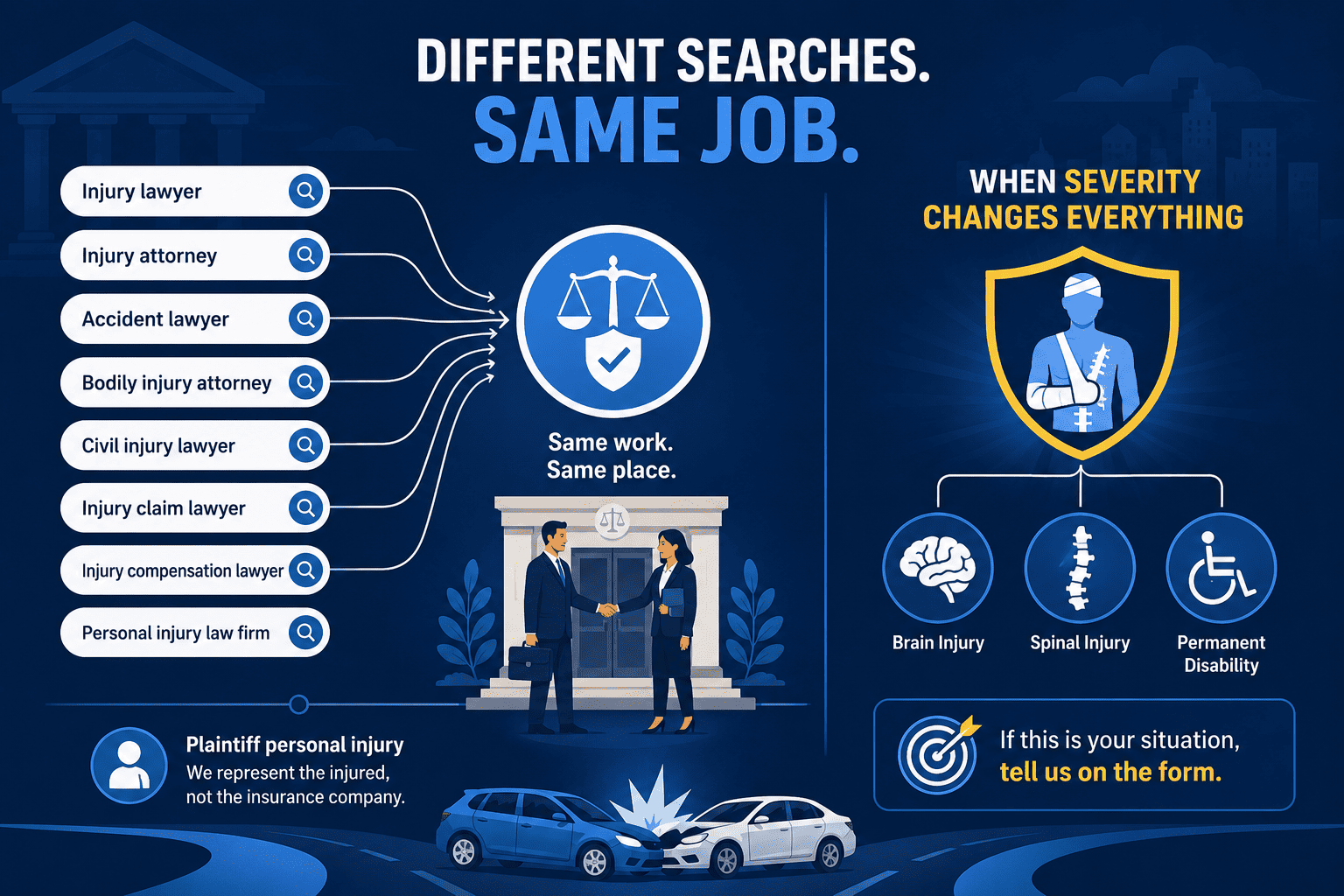
People search for this in a dozen ways and they all land in the same place. Truck accident attorney, 18 wheeler accident lawyer, semi truck accident attorney, tractor trailer accident lawyer, big rig accident attorney, commercial vehicle accident lawyer and trucking accident law firm all describe the same work.
Where the words matter is the type of vehicle and who owned it. A delivery truck accident lawyer handling a van that ran a light is on different ground from a firm taking on a national carrier with a fleet defence team on retainer, and a bus accident attorney may be dealing with a public transit authority, where notice deadlines can be measured in weeks. Say which kind of vehicle hit you on the form.
Commercial vehicle claims cover far more than highway collisions between a car and a semi. These are the ones our network takes on most often — if yours is not here it is still worth a call.
Tractor-trailer collisions on highways and interstates, including underride, jackknife and wide-turn crashes.
See If You Qualify 02Improperly secured, overloaded or unbalanced freight that shifted, fell or caused a rollover — the shipper and loader may share liability.
See If You Qualify 03Hours-of-service violations, falsified logs and failed drug or alcohol testing — provable from the carrier’s own records.
See If You Qualify 04Brake failure, tyre blowouts, worn steering components and skipped inspections, whether the fault sits with the carrier or a repair contractor.
See If You Qualify 05Local delivery, courier and contractor vehicles, where the driver’s employment status often decides how much insurance is available.
See If You Qualify 06Brain and spinal injury, amputation, severe burns, and claims brought by a family after a truck crash death.
See If You QualifyNot sure which one is yours? Plenty of truck claims sit in more than one category — a rollover caused by a badly loaded trailer is a cargo case and a driver case. Pick whichever is closest and the specialist will sort it out on the call.
Start my free reviewBroadly, you have a claim worth taking to a truck accident attorney if most of these are true.
Anything operated for business: a semi, box truck, tanker, dump truck, bus, delivery van, or a pickup pulling a work trailer. Commercial insurance and federal rules turn on how the vehicle was being used, not on its size alone.
The driver, the carrier that dispatched them, the company that loaded the trailer, the mechanic who signed off on the brakes. You do not have to know which one at this stage — that is what the records are for.
Including injuries that surfaced days later. Spinal and brain injuries in particular are routinely missed at the roadside when adrenaline is high.
Medical treatment, missed shifts, care you still need, the vehicle, and the things you can no longer do.
Often two or three years, as little as one in some states, and far shorter where a public transit authority or government vehicle is involved. Check your deadline →
Two kinds of loss, and people routinely forget the second.
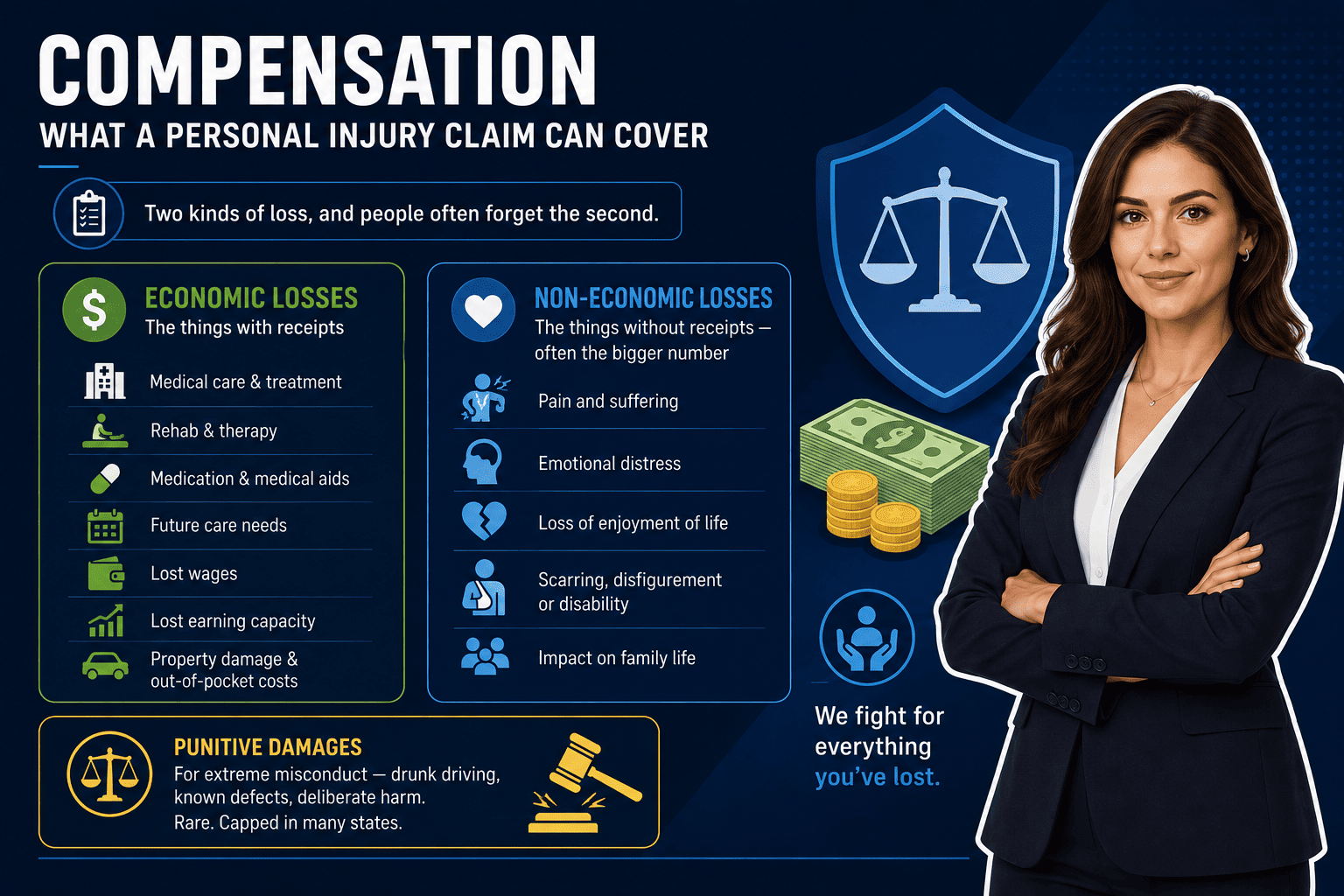
Punitive damages. Truck cases are one of the more common places these come up — a carrier that knowingly kept an unfit driver on the road, falsified logs or ignored a failed inspection. They are still rare, and capped in many states, but the carrier’s own records are what make them possible at all.

In a car crash, the evidence is mostly static: a police report, photographs, medical records. None of it disappears on a schedule. Trucking is the opposite — most of what proves the case belongs to the company you are making the claim against, and they are allowed to destroy a great deal of it in the ordinary course of business.
Hours-of-service records, driver investigation files, inspection reports and dispatch records all sit on retention periods measured in months rather than years. The truck’s engine control module holds only a limited window of event data and can be overwritten once the vehicle is back in service or the module is replaced during repair. Dashcam and yard camera footage is typically on a loop of days.
This is why the honest advice on a truck claim is different from the advice on a fender-bender: the clock that matters is not your filing deadline, it is the carrier’s retention schedule. A spoliation letter sent in the first weeks freezes all of it and creates consequences if it goes missing anyway. If your crash was recent, that is the single most useful thing a lawyer can do for you this month.
If it happened recently, in this order. Step five is the point at which most people start looking for a truck accident attorney.
Adrenaline hides injuries for a day or two, and truck crashes produce spinal and brain injuries that do not announce themselves at the roadside. A gap between the crash and your first medical visit is the single most common thing insurers use to argue you weren’t really hurt.
The carrier name and DOT number on the door, the trailer number, the licence plates, and the driver’s name and employer. A tractor and trailer often belong to different companies, and that detail decides how much insurance is available.
The vehicles, the road, skid marks, debris, the cargo and its restraints, and your injuries as they develop. Commercial scenes are cleared quickly because the freight has somewhere to be.
People leave within minutes and are almost impossible to trace afterwards. A phone number scribbled at the scene has won more cases than most people would guess.
Their adjusters and investigators are often working the crash the same day, and they are experienced at it. You are allowed to say you will respond after speaking with a lawyer.
This is the step that is specific to trucking and the one you cannot do yourself. It stops the logs, the inspection records and the engine data disappearing on a lawful retention schedule.

Federal rules govern how the truck is operated. What your claim is actually worth is still decided state by state.
Most states cut your recovery by your percentage of blame. Some bar recovery entirely once you pass a set threshold, and a small number still apply the old contributory-negligence rule where any fault at all can end the claim.
Commonly two or three years from the crash, as little as one in some states, and only a few months’ formal notice where a government-owned vehicle or a public transit authority is involved. Once it passes the claim is gone, however strong it was.
A dozen or so states run no-fault systems with thresholds you must cross before suing for pain and suffering, and some states cap non-economic damages or claims against public bodies. A cap can matter more to the outcome than anything about the crash.
These are general descriptions, not legal advice, and the rules change. Confirm anything that affects your claim with a truck accident lawyer licensed in the state where the crash happened — that is what the free review is for.
Searching for a “truck accident lawyer near me” gets you whoever bought the biggest ad. What matters is that the attorney is licensed where the crash happened and has actually litigated against motor carriers before. Pick your state — or send the form and we’ll match you with a firm that handles commercial vehicle claims in your area.
Don’t see a page for your state yet? Selecting it takes you to the free case review with your state already filled in. We connect people with truck accident attorneys in all 50 states.
Every firm calls itself the best truck accident attorney in town, which makes the phrase useless. Here is what we actually check before a firm receives anyone from us — and what you should check yourself, on any firm, including ones we never mentioned.
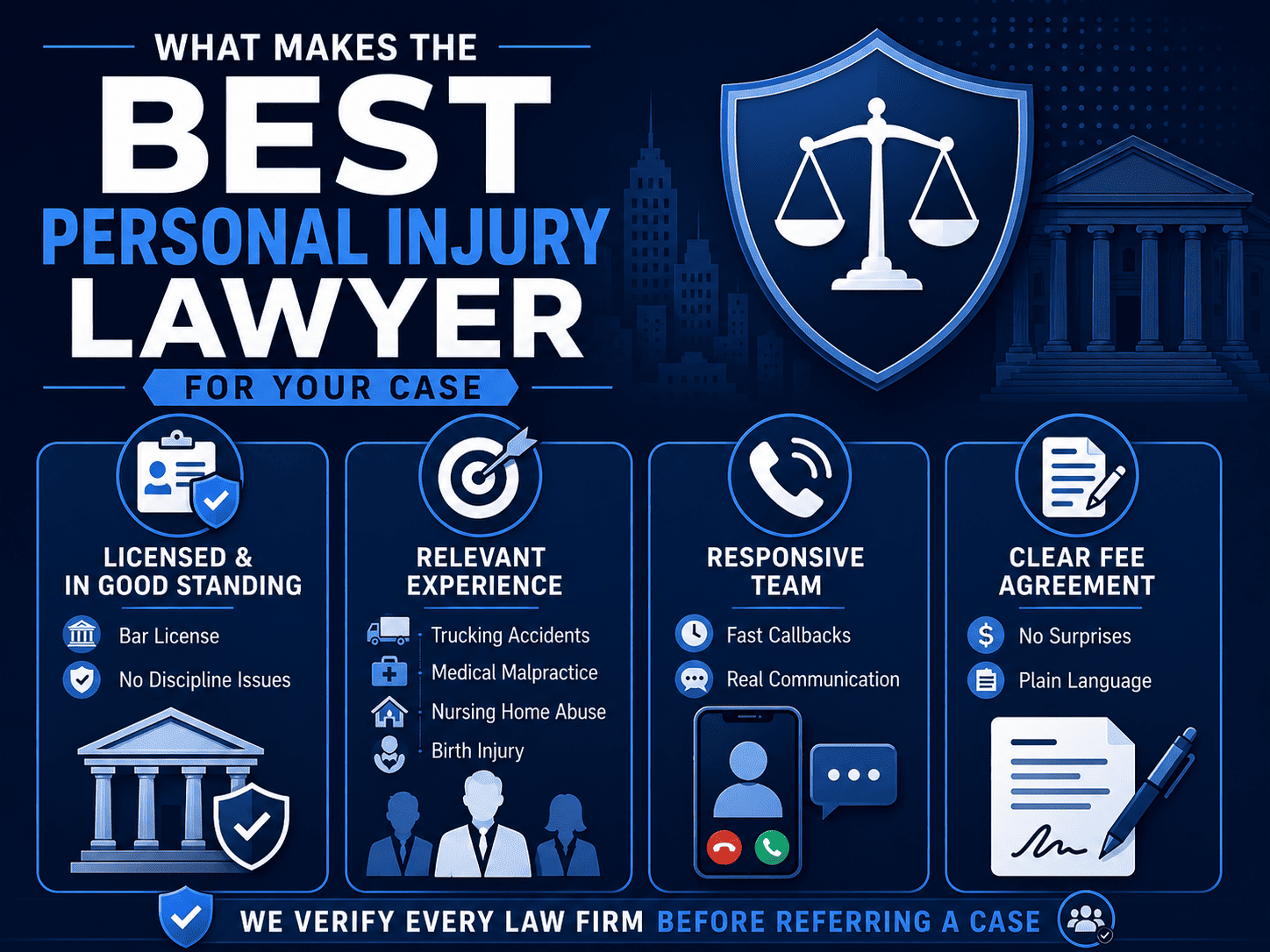
Active bar licence in every state they claim to serve, plus a public discipline search. An open suspension is disqualifying.
Trucking is its own discipline. Ask how many cases they have run against motor carriers, whether they have taken a carrier to trial, and which experts they use for reconstruction.
The preservation demand, the scene inspection and the download of engine data are all early work. A firm that cannot tell you what it will do in the first fortnight is the wrong firm for a truck case.
Percentage, case costs and what happens if you lose — in writing, before you sign. Truck cases carry higher costs than car claims, so this conversation matters more here.
Use these on any firm, including one we didn’t send you. They are the same four questions we ask, and firms that genuinely run trucking cases answer all of them without hesitating. Injury Case Claim is not a law firm and does not represent you — we connect you with the firms that do.
Nothing up front, and nothing at all if you don’t win.
Truck accident lawyers work on contingency: an agreed percentage of what they recover for you, typically in the region of a third, and if there is no recovery there is no attorney fee. You should never be asked for money up front, and the free consultation is standard across the industry.
Case costs are the part worth asking about in a truck claim specifically. Accident reconstruction, engine data downloads, medical experts and depositions of carrier staff cost real money, and the firm advances it. Some firms absorb those costs if the case fails and some bill them back — get the answer in writing before you sign.
Our service is free to you at every stage. We are not a law firm — the attorneys in our network pay us when they take on a case we refer. That does not change the fee you agree with the firm, and it does not oblige you to hire anyone.

Every truck accident attorney we refer works on contingency.
Firms that send the preservation demand in the first weeks.
Attorneys admitted where the crash actually happened.