Most dog bite claims are paid by a homeowner’s insurance policy, not by the owner personally — which is why people who never wanted to “sue a neighbour” are often surprised by how these actually work. Answer a few questions and a claim specialist will call you back, then match you with a dog bite attorney in your state.
Free and confidential. Submitting this does not create an attorney-client relationship.
A claim specialist will review your answers and call the number you gave us, then introduce you to a dog bite lawyer licensed in your state. If a child was bitten on the face, say so on the call — those claims are handled differently and often need to be valued over years rather than months.
Call 800-589-3204This is an advertisement · Injury Case Claim is not a law firm
A dog bite lawyer handles injury claims arising from bites, attacks and knock-downs by dogs and other animals. The claim is usually made against the owner’s homeowner’s or renter’s insurance, which covers this category as standard in most policies, rather than against the owner’s own money. That single fact changes how most people feel about bringing one.
The law differs more between states here than in almost any other injury area. Many states apply strict liability: the owner is responsible for a bite whether or not the dog had ever shown aggression, subject to exceptions for trespass and provocation. Others retain a version of the traditional rule, where you must show the owner knew or should have known the animal was dangerous — the one-bite rule. Several apply different rules depending on where the bite happened.
Beyond the owner, liability can reach a landlord who knew a dangerous dog was on the property, a property manager, a kennel, groomer or dog walker who had control at the time, or a business that allowed the animal on site. Working out which policies are available is most of the early work.
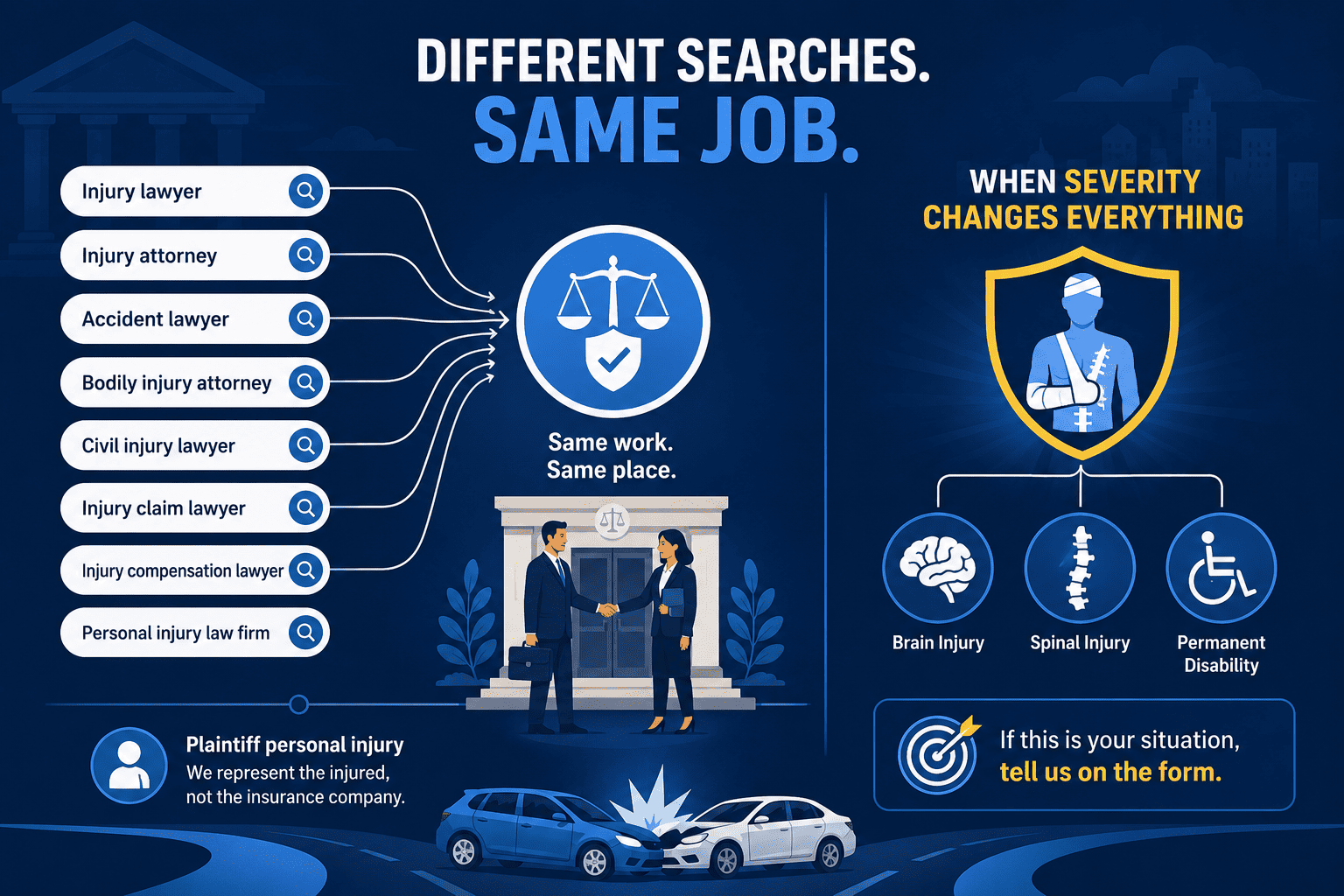
People search for this in a dozen ways and they all land in the same place. Dog bite attorney, dog attack lawyer, animal attack attorney, dog bite injury lawyer and dog bite claim lawyer all describe the same work.
Where the words matter is who was hurt and how badly. A child dog bite lawyer is usually dealing with facial injuries, staged reconstructive surgery and a settlement that has to account for growth over years. A claim involving scarring and disfigurement is valued very differently from a puncture wound that healed clean, and photographs taken over the following months are part of that. Say which applies on the form.
The common thread is an animal that was not contained or controlled the way it should have been — and an insurance policy that exists for exactly that.
The most common serious dog bite injury, because of height. Frequently involves staged reconstructive surgery and long-term scar management.
See If You Qualify 02Visitors, delivery workers, contractors and guests bitten at a home, covered by the owner’s homeowner or renter policy.
See If You Qualify 03Bites on sidewalks, parks and trails, including leash-law violations and dogs that escaped an inadequate fence or gate.
See If You Qualify 04Where a landlord or management company knew a dangerous dog was kept on the property and did nothing about it.
See If You Qualify 05Attacks that happened while a business had control of the animal, including incidents involving another client’s dog.
See If You Qualify 06Fractures from being knocked over by a large dog, and injuries caused while escaping an attack — often brought as negligence rather than under a bite statute.
See If You QualifyNot sure which one is yours? These overlap often — a child bitten by a tenant’s dog in a shared courtyard can be a claim against both the owner and the landlord. Pick whichever is closest and the specialist will sort it out on the call.
Start my free reviewBroadly, you have a claim worth taking to a dog bite attorney if most of these are true.
Bites, scratches, knock-downs and injuries caused while escaping an attack all count. So do injuries to a person trying to intervene.
Public places, your own property, or private property you had permission to be on — including delivery and service workers doing their jobs. Trespass is an exception in most bite statutes.
Provocation generally means deliberate teasing, striking or tormenting. Walking past, reaching to pet a dog you were told was friendly, or startling it accidentally is usually not provocation.
Emergency treatment, wound care, rabies or tetanus prophylaxis, scar revision, and the psychological effects — which are real and frequently undervalued, especially in children.
Often two or three years, as little as one in some states, usually extended where the victim is a child. Check your deadline →
Two kinds of loss. In bite claims the second is very often the larger one, particularly for children.
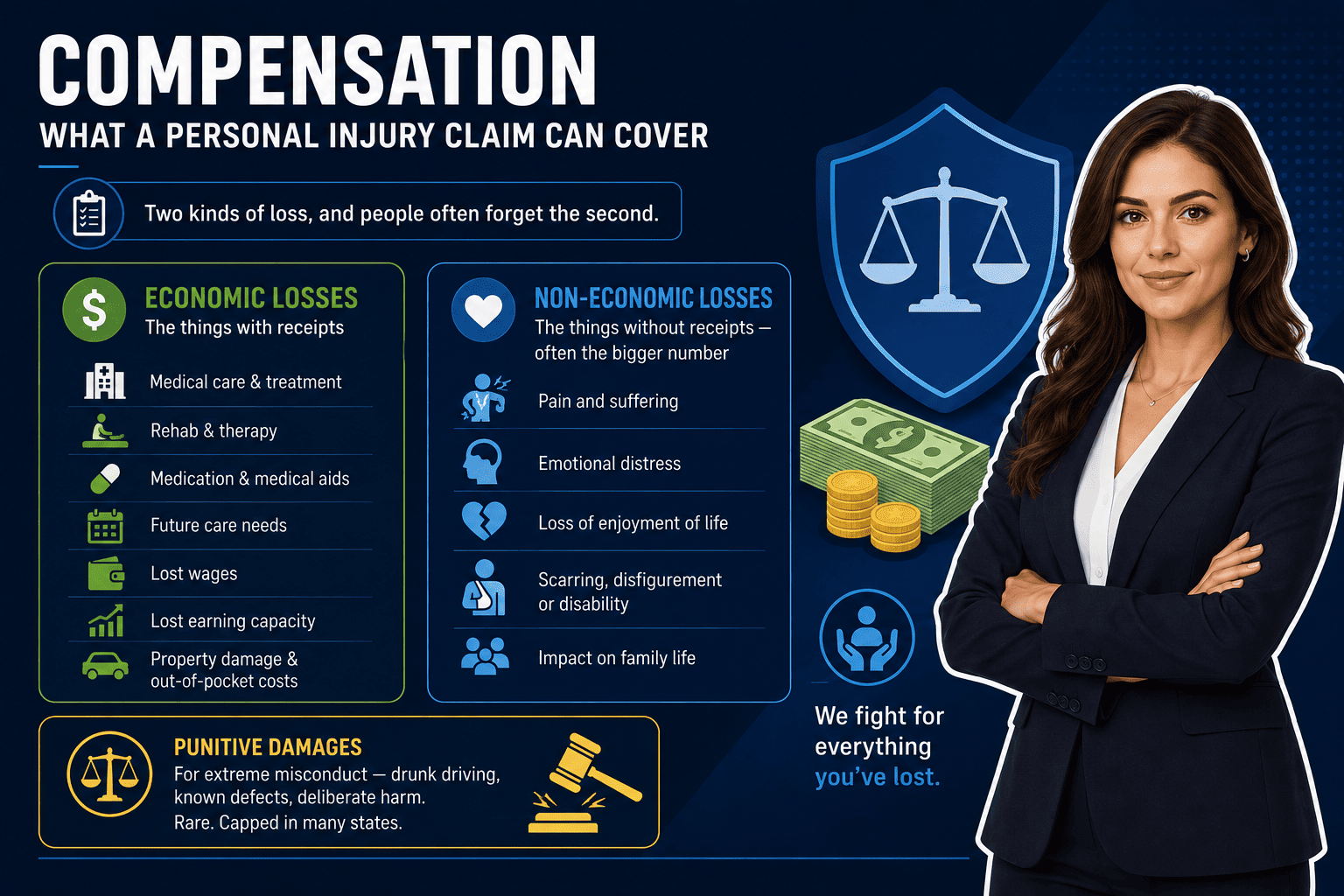
Punitive damages. These come up where an owner kept an animal they knew to be dangerous, ignored prior complaints or a previous attack, or deliberately let it loose. They are rare and capped in many states, but a documented history is what makes them possible at all.
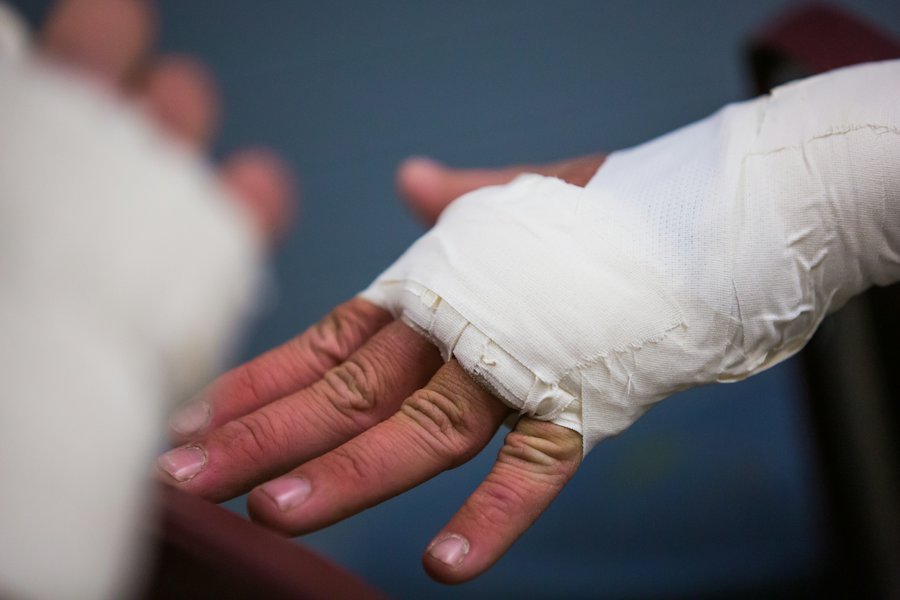
Children are bitten on the face, head and neck far more often than adults, for the simple reason that their faces are at a dog’s height. The immediate treatment is usually the least significant part of what follows.
Facial scars on a growing child are not static. Surgeons frequently wait, and then revise in stages as the child grows, which means the full course of treatment can run for years and the final appearance is not known for a long time. A settlement taken in the first months is a settlement that guesses at all of it — and once a release is signed, further surgery is your own cost.
The psychological side is equally real and equally undervalued. Lasting fear of dogs, nightmares, avoidance of parks and friends’ houses, and anxiety that surfaces years later are common and documented outcomes, and they belong in the claim rather than being treated as something a child will simply grow out of.
Most states recognise this by handling children’s claims differently: filing deadlines are commonly extended until some period after the child turns eighteen, and any settlement usually needs court approval, with the money held for the child rather than paid to a parent. If your child has been bitten, the useful step is a conversation with a lawyer about timing — not a quick resolution with an adjuster.
If it happened recently, in this order. Step two is the one people skip because they do not want to cause trouble for the owner.
Bites become infected at a high rate because of what lives in a dog’s mouth, and puncture wounds that look minor are the ones that abscess. This is a health decision first and a claim decision second.
It creates the official record of the incident and the animal, usually triggers a rabies observation period, and can surface prior complaints about the same dog — which decides the case outright in one-bite states.
Name, address, phone, and whether they own or rent. If they refuse, animal control can usually obtain it. Do not rely on a first name and a street.
The wounds before they are dressed, and again as they heal over the following weeks and months — that sequence is what a scarring claim is built on. Also the gate, fence, leash or enclosure that failed.
Neighbours are often the people who know the dog’s history, which is exactly the evidence that matters most.
Especially where a child is involved or there is any scarring. Medical bills are the smallest part of a bite claim, and a signed release ends everything that comes after.
Four rules decide what a bite claim is actually worth. The first is specific to animal claims and varies more between states than almost anything else in injury law.
Most states cut your recovery by your percentage of blame. Some bar recovery entirely once you pass a set threshold, and a small number still apply the old contributory-negligence rule where any fault at all can end the claim.
Commonly two or three years from the injury, as little as one in some states, and only a few months’ formal notice where a government body is involved. Once it passes the claim is gone, however strong it was.
Many states hold an owner strictly liable for a bite regardless of the animal’s history, usually with exceptions for trespassers and provocation. Others require proof the owner knew of dangerous tendencies. Some apply different rules depending on where the bite happened, and local leash and breed ordinances can matter on top.
Some states cap non-economic damages, most often in claims against public bodies and in medical negligence. A cap can matter more to the outcome than anything about the injury itself.
These are general descriptions, not legal advice, and the rules change. Confirm anything that affects your claim with a lawyer licensed in the state where it happened — that is what the free review is for.
Searching for a “dog bite lawyer near me” gets you whoever bought the biggest ad. What actually matters is that the attorney is licensed where you were hurt, because deadlines, fault rules and damage caps are all set state by state. Pick your state — or send the form and we’ll match you with a firm that handles your type of claim in your area.
Don’t see a page for your state yet? Selecting it takes you to the free case review with your state already filled in. We connect people with attorneys in all 50 states.
Every firm calls itself the best dog bite lawyer in town, which makes the phrase useless. Here is what we actually check before a firm receives anyone from us — and what you should check yourself, on any firm, including ones we never mentioned.
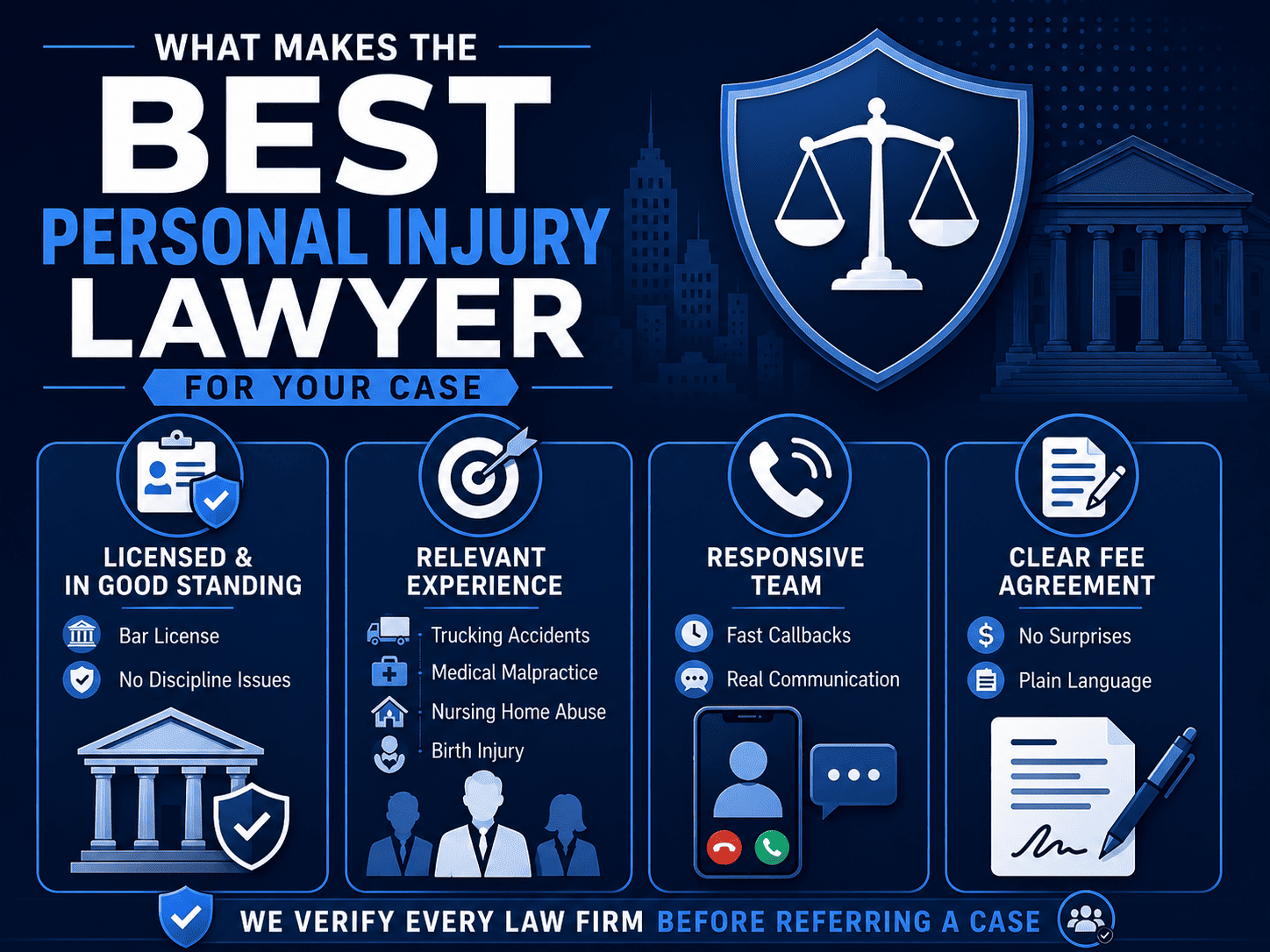
Active bar licence in every state they claim to serve, plus a public discipline search. An open suspension is disqualifying.
Ask how many bite claims the firm has resolved, whether they have handled a child’s facial scarring case through to court approval, and whether they know which rule your state applies — strict liability or one-bite. That answer should be immediate.
We track how long each firm takes to call a new claimant back. Firms that leave people waiting stop receiving cases.
Percentage, case costs, and what happens if you lose — in writing, before you sign.
Use these on any firm, including one we didn’t send you. They are the same four questions we ask, and good firms answer all of them without hesitating. If a firm won’t put the fee terms in writing before you sign, that is your answer. Injury Case Claim is not a law firm and does not represent you — we connect you with the firms that do.
Nothing up front, and nothing at all if you don’t win.
Dog bite lawyers almost always work on contingency: they take an agreed percentage of what they recover for you, typically in the region of a third, and if there is no recovery there is no attorney fee. You should never be asked for money up front, and the free consultation is standard across the industry.
Where a child is involved, a court approving the settlement will also review the fee, which is an additional safeguard rather than an extra cost to you.
Our service is free to you at every stage. We are not a law firm — the lawyers in our network pay us when they take on a case we refer. That does not change the fee you agree with the firm, and it does not oblige you to hire anyone.

Every attorney we refer works on contingency.
Your details go only to the firm we introduce.
Lawyers admitted where you were actually hurt.